I had never really given much thought to typefaces until this week. It wasn’t something I paid much attention to. But after being introduced to the world of typefaces, fonts, and everything in between, I realized how much they play a role in brand identity.
Discovering the Power of Typefaces
Some typefaces are instantly recognizable. While scrolling through typefaces online, I came across one that felt extremely nostalgic. If you grew up in the early 2000s, you are probably familiar with the children’s book, Don’t Let the Pigeon Drive the Bus! by Mo Willems. The cover’s iconic typeface is seared into my memory. The moment I saw it, I felt 5 years old again. I hadn’t thought about that book in years, but with just one glance at the typeface, I could picture the cover perfectly. That’s when I realized how powerful typefaces really are.

Typefaces have a unique way of shaping how we interpret content or a brand. For example, think about the Harry Potter series, which is another nostalgic brand for me. The recognizable lightning-bolt-inspired typeface used for the book titles and movies is now synonymous with the franchise. Without even seeing what something says, most people would immediately associate the typeface with the franchise. It’s a perfect example of how typefaces become deeply tied to a brand or cultural phenomenon.
Typefaces vs. Fonts
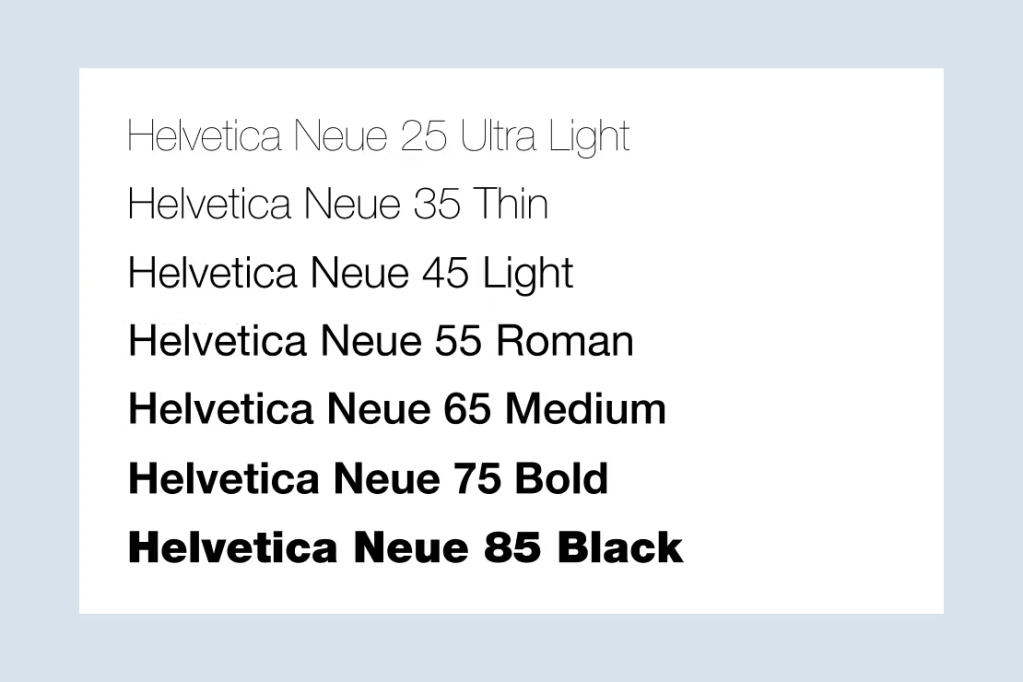
Up until this week, I had always used the word font to describe what I now know is a typeface. Turns out, there’s actually a difference. A typeface refers to a font or font family with various widths and weights, but same overall style. A font, on the other hand, is the style of the typeface within that family. In the image below, the typeface is Helvetica Neue, while the fonts are all of the variations —like Helvetica Neue 25 Ultra Light is a font, the same way Helvetica Neue 85 Black is a font. Make sense?
It’s interesting how something as subtle as typeface can evoke such strong emotion and memories, all while playing a role in shaping how we perceive brands. “Well-chosen typography can enhance the brand’s image, making it more memorable in the minds of its target consumers.” When you think about some of the most memorable typefaces, you might think of the Nike typeface, Futura Bold Condensed. It’s bold, energetic, and strong. Or, you might think of writing a paper in APA format and making sure the typeface is Times New Roman, which is slightly decorative and easy to read. Different fonts convey different meanings, and each one is unique.
Typefaces = Brand Identity
I never thought I’d care much about typefaces, but now I can’t stop noticing them. They’re everywhere — on book covers, logos, websites — and they’re important to a brand’s identity. Whether they spark nostalgia or make a brand instantly recognizable, typefaces have a subtle yet powerful influence. They’re a reminder that even the smallest details make a difference in brand story and identity.
 Mia Krysa
Leave a comment