Tag: books

  • A Creative Future in Women’s Sports

    A Creative Future in Women’s Sports

    Rooted in Passion

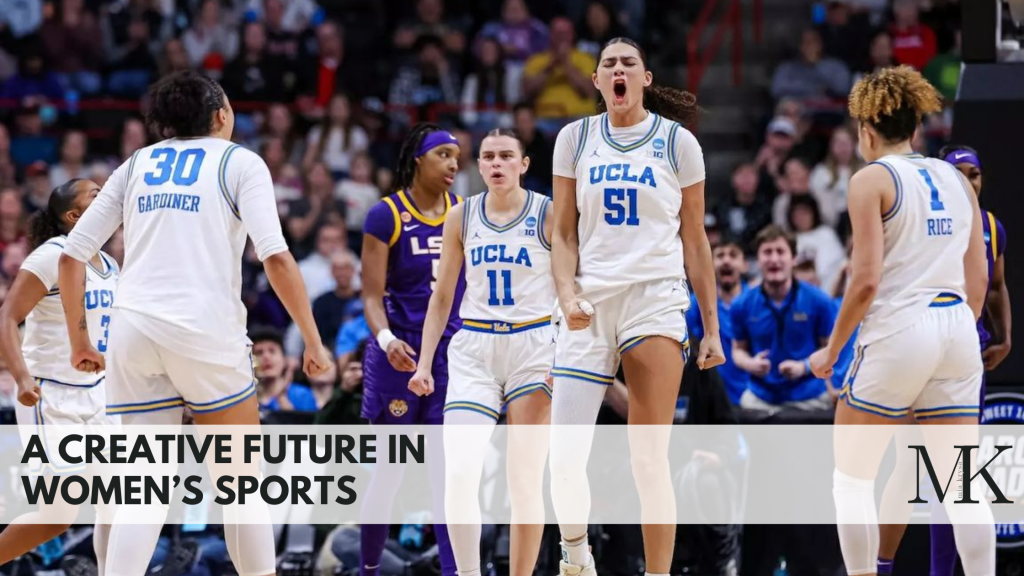
    When I think about my future in the sports world, there’s one thing I’m sure of. As a woman, I want to be an ally for other women and advocate for women athletes in one way or another. Right now, I work as a marketing intern for the Connecticut Sun, and it’s truly my dream internship. My boss trusts in my ideas and in my content, which I think has made me a more confident employee. I love writing, creating graphics, working with paid social (something I never thought I’d say!) and just being creative. Any chance I get to do anything player forward — whether that’s running a meet and greet, crafting a newsletter about what the team has been up to, or helping out a player during media day, I’ll take.

    In my personal life, I love creating content. I love reading, writing, posting on Instagram, traveling, and making TikToks. I’ve always been more creative-minded than anything, so I think working in a position that combines my strengths in creativity and my passion for the WNBA is the perfect role for me.

    Curious About What’s Next

    I’d love to stick with marketing, but I’ve also thought about creating content (player facing). With the Connecticut Sun though, I don’t think that creating content is strategic enough for me. Lately, I’ve been thinking more and more about PR, which I don’t have much experience in, but I have a knack for writing. It’s something I’m hoping to explore before my internship ends.

    I love the days where we travel and have to work games. Being in an environment where I’m seeing an audience cheering for women is inspiring, and I hope it never ends. I feel that I’ve entered the league at the perfect time — it’s exploding and it’s only just the beginning.

    Looking Toward the Bigger Picture

    One day, I could see myself transitioning to a position that spans league-wide, not just for a specific team. Working for the league seems like such a great opportunity to experience athletes, sports media, and sports marketing as a whole. I’ve learned so much from the Sun, and have come to love the team and it’s players, but content always remains focused to one team.

    I’m sitting in front of the TV, watching the 2025 WNBA All-Star game in Indiana, and can’t help but think, “what a wonderful thing to be part of.” No matter what specialty I end up in, whether it’s marketing, content creation, or PR, I know I’ll thrive in a role where I can be creative. I’m blessed to have this opportunity with the Sun, and I can’t wait to see what the future holds for the team.
  • The Subtle Influence of Typefaces on Memory and Branding

    via PicMonkey

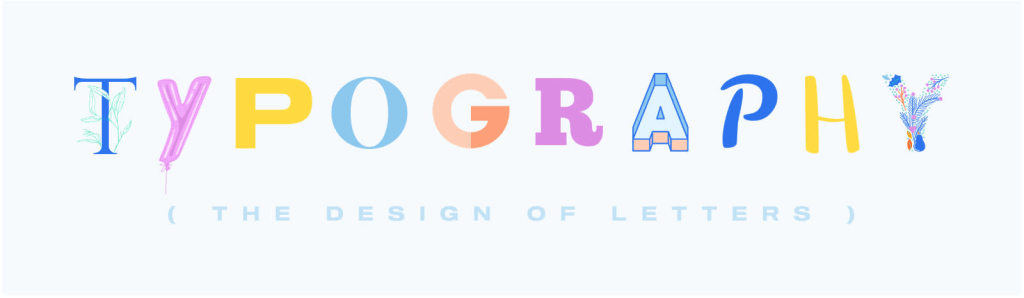
    I had never really given much thought to typefaces until this week. It wasn’t something I paid much attention to. But after being introduced to the world of typefaces, fonts, and everything in between, I realized how much they play a role in brand identity.

    Discovering the Power of Typefaces

    Some typefaces are instantly recognizable. While scrolling through typefaces online, I came across one that felt extremely nostalgic. If you grew up in the early 2000s, you are probably familiar with the children’s book, Don’t Let the Pigeon Drive the Bus! by Mo Willems. The cover’s iconic typeface is seared into my memory. The moment I saw it, I felt 5 years old again. I hadn’t thought about that book in years, but with just one glance at the typeface, I could picture the cover perfectly. That’s when I realized how powerful typefaces really are.

    The Cover of Don’t Let the Pigeon Drive the Bus! | Source: Mo Willems

    Typefaces have a unique way of shaping how we interpret content or a brand. For example, think about the Harry Potter series, which is another nostalgic brand for me. The recognizable lightning-bolt-inspired typeface used for the book titles and movies is now synonymous with the franchise. Without even seeing what something says, most people would immediately associate the typeface with the franchise. It’s a perfect example of how typefaces become deeply tied to a brand or cultural phenomenon.

    Typefaces vs. Fonts

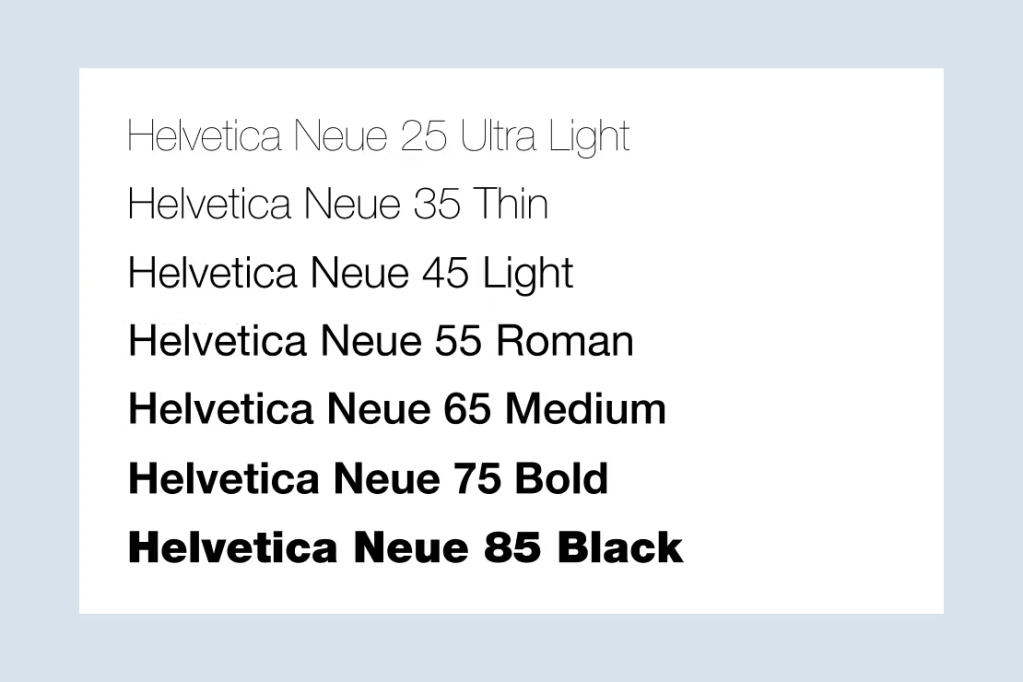
    Up until this week, I had always used the word font to describe what I now know is a typeface. Turns out, there’s actually a difference. A typeface refers to a font or font family with various widths and weights, but same overall style. A font, on the other hand, is the style of the typeface within that family. In the image below, the typeface is Helvetica Neue, while the fonts are all of the variations —like Helvetica Neue 25 Ultra Light is a font, the same way Helvetica Neue 85 Black is a font. Make sense?

    Source: Wix

    It’s interesting how something as subtle as typeface can evoke such strong emotion and memories, all while playing a role in shaping how we perceive brands. “Well-chosen typography can enhance the brand’s image, making it more memorable in the minds of its target consumers.” When you think about some of the most memorable typefaces, you might think of the Nike typeface, Futura Bold Condensed. It’s bold, energetic, and strong. Or, you might think of writing a paper in APA format and making sure the typeface is Times New Roman, which is slightly decorative and easy to read. Different fonts convey different meanings, and each one is unique.

    Typefaces = Brand Identity

    I never thought I’d care much about typefaces, but now I can’t stop noticing them. They’re everywhere — on book covers, logos, websites — and they’re important to a brand’s identity. Whether they spark nostalgia or make a brand instantly recognizable, typefaces have a subtle yet powerful influence. They’re a reminder that even the smallest details make a difference in brand story and identity.

  • Redesigning Goodreads: A UX Research Case Study

    Photo by Startup Stock Photos on Pexels.com

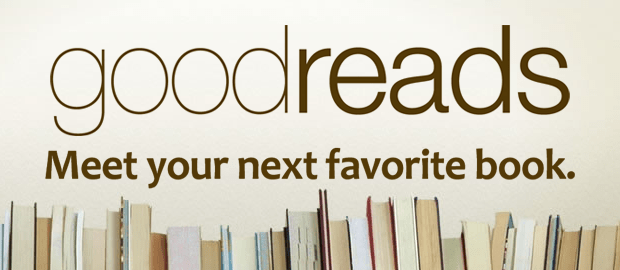
    Goodreads is a well-known book-tracking platform for book lovers. It’s the most popular platform of its kind and serves as a place for organizing, book reviews, recommendations, and more. Despite its popularity, many users find it cluttered, unorganized, and hard to navigate. This case study explores the research conducted in evaluating Goodreads’ strengths and weaknesses to suggest a more user-friendly design. 

    At First Glance 

    The first step in the site evaluation process was simply to evaluate. It was important to take note of common issues and research the problems that users were having on a day-to-day basis. Upon immediate inspection, the website felt cluttered and disorganized and had an overwhelming navigation center. There were irrelevant pop-up ads and glitches with the reading challenge, a popular feature that many users like to participate in. Goodreads and its competitors were also researched in this step. Even though Goodreads is the most popular, it lacks up-to-date features that platforms like StoryGraph use: the ability to make ½ star ratings and book recommendations based on your mood, to name a few. 

    From the User’s Perspective

    Next, personas were created to imagine the different kinds of users that use Goodreads. Also, interviews and surveys were made to learn what users liked and disliked about Goodreads. Most often, users liked the book-tracking and organizational features but disliked its outdated design and lack of personalized recommendations. 

    Along with the interviews and surveys, a card-sorting test was conducted to help re-work the navigation center. Many of the pages listed in the Goodreads navigation center were repetitive, unclear, and just didn’t make sense. Users were given the freedom to sort the pages in categories where they saw fit, and patterns were recorded to then come up with a navigation center that would make sense to most people. 

    Photo by Pavel Danilyuk on Pexels.com

    Goodreads’ Usability 

    While the website seems like it’d be easy to navigate, a heuristic evaluation showed the opposite. The site is over-complicated, and the navigation center continues to disappoint. A usability test was also conducted, and results showed that users who were familiar with Goodreads had learned to navigate around the flaws, whereas users who weren’t so familiar with the platform struggled altogether. 

    Suggestions for Goodreads 

    After this 6-week evaluation, some suggestions are definitely in order. 

    • Goodreads needs a dedicated “Trending Now” section, instead of plopping new books on all kinds of pages, with no theme or organization 
    • Incorporate AI into their recommendations like other platforms to give a more personalized feel
    • Reduce ads (or completely get rid of them!) as they’re messy and distracting 
    • Put more time and effort into the back-end of the platform to reduce issues that users are experiencing with website glitches and their devices not syncing 
    • Review filtering should be improved so users can filter through the kinds of reviews they want to see and add a ½ star option for more accurate ratings 
    • Market less towards authors and more towards readers 
    • Combine pages where seen fit. There are too many pages that repeat the same information in a different way 
    • Friend activity tracking should be more accessible and designed less like a social media feed 
    • Updated design for a modern, cleaner feel 
    via Goodreads

    Conclusion 

    This project combined various UX research methods to suggest a complete website redesign of Goodreads. In the end, what matters most is that Goodreads prioritizes its readers. Users want to feel seen, heard, and listened to, and Goodreads is not doing that. With a better design, condensed navigation, and more updated and personalized features, it could become a platform that readers truly enjoy. 

    Below is the final report.

  • The Audiobook Dilemma: Habit-Stacking, Retention, and the Future of Reading

    Photo by Ivo Rainha on Pexels.com

    I set a reading goal for the beginning of 2024 to read 52 books. I underestimated how hard it was going to be for me to stick to my goal. I’m ashamed to say that I’m now at about 9 books completed for this year. I’m so disappointed and have found myself scrambling to finish as many books as possible before the new year in attempt to make myself feel better.

    The problem is that I’ve found it hard to find books that hold my attention. I’ll start a book and make it a quarter of the way through (sometimes even half!) and I just get bored, and won’t finish it. After contemplating why I tend to do this, I think another reason was probably that I don’t have enough time. And I hate that excuse. But here’s what I’ve done to overcome that.

    Habit-Stacking to my advantage

    I came across this new thing called habit-stacking. It’s where you stack a few things you need to get done—and do them at the same time— to be as efficient as possible. In my case, I started listening to audiobooks while I was driving, cleaning, cooking, showering — you name it. I thought I could try to finish as many books as possible, while doing the things I’d already be doing.

    Writing for the ear

    I came across an article about writing for the ear. “When you are writing for print, ideas and stories are communicated in a visual-linear mode which engages logic and thought. The kind of writing you do for a listener is quite different than when writing for readers. When writing for the ear, follow the ABCs. Accurate. Brief. Clear.” (Swenson, 2017).

    This got me thinking if I was even absorbing any of the information I was listening to, rather than if I’d actually read it. Audiobooks aren’t necessarily written for the ear. Books are written to be psychically read, while cozied up on the couch. While I feel like I’m doing the right thing by listening to as many books as I can to read my goal, is it worth it if I don’t even retain the information?

    I wonder if at one point in the future, books will be written to be listened to. Podcasts are formatted to be listened to, as well as radio shows and news broadcasts. Will authors ever decide to write book in an audiobook format? Will it change the way we read? With AI on the rise, I’m curious to know what the future of books will look like.

    References

    Arnold, A. (2017, October 24). Writing for the Ear Instead of the Eye. Swenson Book Development. https://swensonbookdevelopment.com/blog/2017/writing-for-the-ear-instead-of-the-eye/

  • Lessons from Ms. Williams

    Photo by lil artsy on Pexels.com

    After beginning On Writing Well, by William Zinsser, I started reflecting on my life as someone who’s always considered herself a writer. My earliest memories involve me having some kind of journal, where I’d write about my days at school and talk about memorable moments that I wanted to remember. As time passed, these moments ranged from concerts, holidays, vacations, the birth of my sister (my favorite—I was 12, and it was on Easter that year), graduations, breakups, and everything in between.

    Over the years, I began adding pictures into my journals. I’d print them from my phone, take Polaroids, and kept receipts or other memorabilia to glue into the pages. Some of my favorite pages to look back on are where I kept to-do lists. I’m able to look back on not only what I was thinking about that day, but what I had to do. My to-do lists from high school are vastly different from my to-do lists now. I love being able to see the natural progression of my own life.

    In high school, I enjoyed writing essays and English assignments. My school was very small, with not many teachers, so I had the same English teacher my freshman and senior year—Ms. Williams. She was always serious and came off a bit cold at times, but you could tell that there was warmth beneath the surface. I think I’d only seen her laugh a handful of times. She cared about what she taught and it showed.

    Ms. Williams ingrained a few rules about writing in my brain that I will probably never forget. We could never use first person in our writing. It felt so freeing anytime I’d had an assignment where first person was allowed. She taught us how to structure a thesis at the end of an introduction, and we had to follow this format no matter what:

    One can see why/how this argument is true (for example) by analyzing xyz.”

    That used to frustrate me. One? Who is that? In On Writing Well, Zinsser, he states, “I don’t want to meet “one”—he’s a boring guy.” She also hated when we used the word “it” as she felt it was unclear. For example:

    Ms. Williams was also the only teacher to give me a detention for going to the beach on senior skip day. On Writing Well has me questioning rules about writing that I believed to be true. I’ve never read a book about writing, so maybe his opinions aren’t necessarily unique, but they’re new to me. I’m excited to continue reading this book and learning more about writing to become a better writer. So far, I’ve learned that it doesn’t have to be that serious. Write for you, not an imaginary audience. I’m thankful I have years of journals to look back on and know I’ve improved as a writer since my middle school journals, maybe thanks to Ms. Williams.

  • Writing for Today’s Society

    Photo by Pixabay on Pexels.com

    Writing has always been something I enjoyed. And I always felt like it came easy to me. I was never intimidated by essays or assignments where lots of writing was expected. The assignments I dreaded most were ones that involved math or science.

    I’ve never thought about how I write or why I write. I just write. And to ponder all of the logistics that come with writing online is a new feeling for me. I was thinking about “readability” and what makes one thing easier to read than others. It’s not just about the text– it’s about how the text looks on the screen and other elements, like photos, that draw in the reader.

    What makes online text easier to read?

    Anyone can write. But writing well is what makes you stand out. This day in age, everyone is moving fast. We all have things to do and places to be, and we rarely stop to read anymore. Less and less people can focus long enough to get through an article or read a chapter of a book. More of us are prone to scanning, where we scroll quickly and try to pick out the important pieces. It’s gotten to a point where we have to tailor the way we write to make the content more digestible.

    The Basics of Writing Well Online

    A few things I learned to keep in mind are below:

    1. Spacing between paragraphs is helpful to not overwhelm the reader.
    2. Bullets, lists, or numbers are great for skimming.
    3. Minimize the amount of words you use to keep readers engaged.
    4. Subheaders!
    5. Make sure your font is large enough.
    6. Use pictures throughout.
    7. The larger and cleaner the margin, the better (for the most part).

    Moving Forward

    As someone who writes for fun, and posts her work online, these are all important things that I never really considered in my own work. It’s an aspiration of mine to be someone who writes well. One day, I hope to write a book (maybe a memoir?), but for now, I think it’s important to know how to write online. When society is chronically online, it’s a crucial skill to have.