
I learned about design thinking during my first semester of graduate school. As a new student in the program, I couldn’t understand why the design thinking process differed from how someone came up with a new invention. You create a solution to a problem. Test it out. Go through lots of trial and error. Keep working until you get it right.
I thought about the process of design thinking while I was at work; packaging take-out orders, making drinks, and serving food. After contemplation while mixing espresso martinis, I realized that the thought process in design thinking is not solely about fixing an error or an inconvenience, it’s about who you’re designing for. Let me explain.
GE Healthcare is Putting Pediatric Patients First
Esther Han, a Harvard Business School Online writer, wrote an article listing examples of design thinking in businesses. One of the companies she spoke about was GE Healthcare, a medical equipment manufacturer. GE Healthcare created an MRI machine that was seemingly free of any error, but what they didn’t think about, was how children were going to react to getting MRIs done. If you’ve ever gotten an MRI, you probably know that they’re loud, dark, cold, and just plain uncomfortable. Pediatric patients were experiencing extreme anxiety during these scans, which would sometimes result in unsuccessful images.
So, instead of changing the product itself, GE changed the way they presented the product to pediatric patients. Introducing, GE’s “Adventure Series”. Instead of lying down in a scary, loud machine, take a trip to the jungle or explore under the sea. These designs were so successful, that practitioners noticed patients were excited to get their scans completed. Not only did this design improve the anxiety levels of the patients, but it increased the chances of a successful scan.

How Do I “Design Think”?
This exact scenario is design thinking in action. Now that you have an example of what design thinking looks like, we can talk about what the process entails on the back end.
Here are the steps, in no particular order:
- Empathize. In other words, how do people experience the problem at hand? Put yourselves into others’ shoes. Pay attention to all of the details that come up when you observe with an open mind. Gather information.
- Define. Do some deeper research to understand the problem and then, state your problem. The key here is to think of the problem from the user’s perspective. For example, instead of, ‘“we need to increase our food product market share among teenage girls by 5%,” try, “teenage girls need to eat nutritious food in order to thrive, be healthy and grow.”’
- Ideate. Brainstorm different solutions! Bounce ideas off of other people. Think about what works and what doesn’t.
- Prototype. Build your idea. It doesn’t have to be perfect, just sketch or create something concrete to present to your ideal audience.
- Test. Try out your product or idea with its intended audience. Record feedback. Make changes. Empathize more. Define again. Brainstorm new and improved ideas. Rinse and repeat.
It’s important to remember that, unlike some other rigid processes, this process is non-linear. It’s okay to take one step forward and two steps back to refine your idea(s). Tim Brown, the CEO and president of design firm IDEO, explained it like this; “The design process is best described metaphorically as a system of spaces rather than a predefined series of orderly steps.” Don’t get caught up in trying to follow the guidelines to a T.
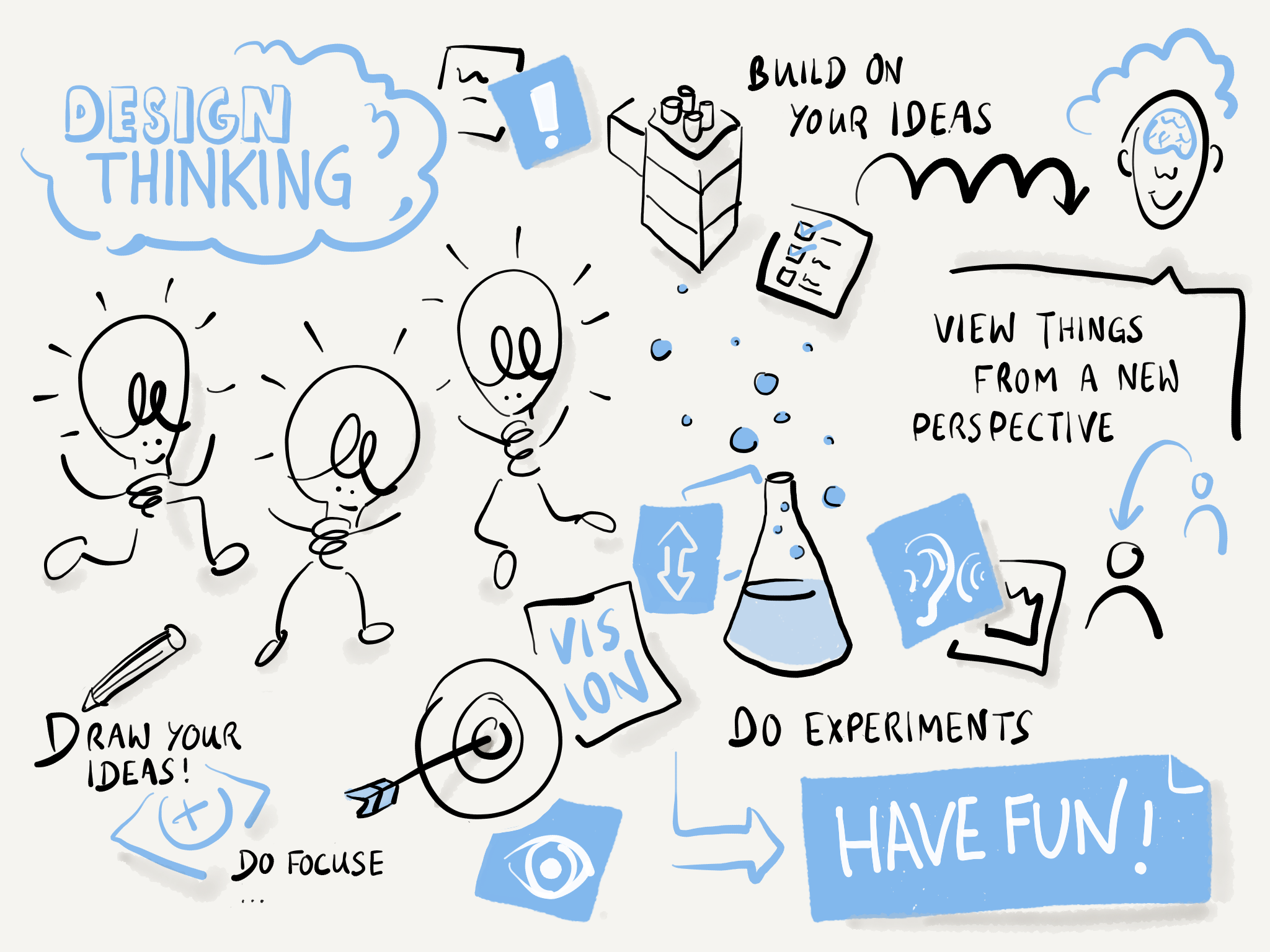
With design thinking, the goal is to empathize with humans. Instead of thinking critically, mix in a bit more creativity and imagination. Challenge yourself to find the best ideas and ultimate solutions.
 Mia Krysa