Tag: life

  • Reflecting on Growth: My Final Blog Post in the ICM Program

    Reflecting on Growth: My Final Blog Post in the ICM Program

    Learning Through Women’s Sports

    I’ve learned so much about myself during these last few weeks — and the last year. Over the course of five weeks, I worked on a LinkedIn article series highlighting women’s sports and the inequalities that athletes face. I spent countless hours researching and listening to books, diving deeper into the stories of women who inspire me.

    One of those women is Dawn Staley. While I still haven’t finished her book Uncommon Favor (which I highly recommend), I’ve taken a closer look at her career and leadership style. She’s authentic, vulnerable, and unapologetically real — qualities that have made her a role model to so many. Recently, I even listened to her on Michelle Obama’s podcast, IMO, which I also recommend for anyone who wants to feel empowered.

    Closing a Chapter in My Master’s Program

    As I write this, I feel a weight lifted from my shoulders. This is the last blog post I’ll be writing during my time in the ICM program. Over the past year, I pushed myself to take as many courses as possible in order to finish my master’s degree quickly — and now, looking back, I can see how much my life has shifted during that process.

    I truly owe so much to this program. I’ve learned the importance of strategy, developed skills in content creation, and embraced my creativity more fully than ever before.

    Lessons from My LinkedIn Series

    When it came to my LinkedIn series, the results weren’t exactly what I envisioned. But what I gained was even more valuable: confidence. I’ve become less intimidated about posting on LinkedIn, more comfortable sharing my voice, and better at managing my time.

    I also learned how to document my work effectively, prioritize tasks, and evaluate what needs to be done first versus what can wait. These are skills that will stick with me long after this project.

    Final Results

    Here’s a snapshot of the total performance of my LinkedIn series:

    2,901 impressions | 54 likes | 6 comments | 8 reposts | 21 new followers

    While the numbers tell one part of the story, the growth I experienced throughout this process tells the rest.

    Moving Forward

    This project marks both an ending and a beginning. It’s the close of my time in the ICM program, but also the start of applying everything I’ve learned to the next chapter of my career.

    More details about my project can be found within my portfolio, or linked here.
  • People, Paid Social, and Purpose: Lessons From My Graduate Student Journey

    People, Paid Social, and Purpose: Lessons From My Graduate Student Journey

    I can’t believe a year has gone by since I started the ICM program. I’ve spent countless hours on blog posts, projects, and what has felt like endless research on how to communicate effectively online. I have so much to thank this program for, and here’s a few things I’ve learned.

    1. People first. Companies seem to forget that empathizing with humans is one of the most important things in marketing. It doesn’t matter how well your product works, or how clean your website is. If you aren’t prioritizing the human side of marketing, your brand will easily get lost among the millions of others online. Take the time to understand your audience and prioritize communication with them.
    2. Don’t forget about paid social. I’ve always been a lover of organic social, but in my internship with the Connecticut Sun, I learned so much about the importance of paid social — and I feel like I almost like it more. With the combination of both, you have the ability to build trust with your audience, stay spontaneous, and target new fans.
    3. Typography matters (and so does white space). Surprisingly, one of the things that has stuck with me most is the importance of typography in brands. After learning about the importance of font families, typefaces, and kerning, I feel like I notice it everywhere. I think about why people have chosen the typefaces they do to represent their brand, and what might they want that typeface to convey. I also learned the importance of white space and how it can help you of more ways than one.
    4. Learning never ends. I’ve always loved being a student. I’d gone back and forth about the pros and cons of going back to school after I got my bachelor’s, and the pros heavily outweighed the cons. Throughout this program, while there are some things I’ve noticed stayed the same, the marketing and digital space is constantly changing. I think being open to the ever-evolving world of social media and digital marketing, while continuing to ask questions, is the best way to grow. A long-term life goal of mine is to be a forever student. Ask questions. Stay curious. Keep an open mind.
    5. I finally found my future in women’s sports. I always struggled to figure out where I fit in the professional world. It wasn’t until I landed my internship at the Connecticut Sun (which was ignited by my love of UConn women’s basketball), that I felt like I found my place. I’ve loved sports since I was a kid, and I find celebrating women athletes to be empowering and motivating. I’ve recently been promoted to Marketing Specialist, and I owe so much to this program — having a master’s degree alone is a good way to make people double-take your job application.

    Looking Ahead

    I’ve accomplished so many things in such a short amount of time, that I’m allowing myself to finally take a deep breath in the completion of my degree. It is one of the things I’m most proud of thus far. I can’t wait to see what the future holds.

  • Learning (and Posting) As I Go: A Busy Week, My Birthday, and a LinkedIn Lesson

    Learning (and Posting) As I Go: A Busy Week, My Birthday, and a LinkedIn Lesson

    This week was an exceptionally busier week than the last — and I already thought it couldn’t get any busier. It was my birthday, I got a promotion at work, and have really tried to pace myself with my homework. In the past, I’ve found myself saving all of my homework for the weekend or for a Sunday, and am miserable trying to complete everything by the due dates. At work, and through weekly production journals for my class, I’ve found myself become better at pacing my work, and am much less stressed

    A Reminder from my Boss

    The other day, my boss was explaining to me that even though I like to cross everything off my to-do list, I need to get out of that mindset. Likely, my to-do list will never end. It’s more about prioritizing what needs to get done first. And then ask yourself, what could wait until next week?

    Diving Into a New Topic: Gender Pay Gap in Sports

    This week, I wrote about the gender pay gap in sports. This issue has been a well known issue in the world in general for so long, that I feel like maybe it’s just not interesting. For my first article, I wrote a brief history on women’s sports, and below are the metrics:

    Article #1
    Post Date
    : Jul 28, 2025
    Post Publish Time 1:00 PM

    Impressions: 1,005
    Members reached: 588
    Profile viewers from this post: 12
    Followers gained from this post: 0
    Reactions: 16
    Comments: 6
    Reposts: 2

    Here are the metrics for my second article:

    Article #2
    Post Date: Aug 1, 2025
    Post Publish Time: 3:00 PM

    Impressions:171
    Members reached: 88
    Profile viewers from this post: 1
    Followers gained from this post: 0
    Reactions: 3

    Timing is Everything

    After seeing these metrics, it’s safe to say that I will not be posting on a Friday again. Hootsuite published an article that had recommended times for each days of the week, if you wanted to post every day. What’s most important about that article though, is that even if you post at a good time for that day, it might not be the best time in the week. Comparing the metrics from a Monday LinkedIn post to a Friday LinkedIn post showed a drastic change, and I can definitely learn something from my audiences’ behavior. On Monday, people are scrolling LinkedIn more, ready to take on the work week. By Friday, people might not be as active on LinkedIn because they’re ready for the weekend.

    Do I blame them? No. Do I wish my second article performed better? Yes. Admittedly, I don’t know why I would’ve posted at 3:00PM either. That was probably an error on my part, because no article that I have read suggests posting at 3PM on a Friday.

    Knowing Your Audience — and Reaching the Right One

    Another thought I had, was that maybe my article just wasn’t appealing to the followers that I currently have. Women are probably more interested in the topic at hand. The women’s pay gap doesn’t really appeal to men. Over half of my followers/connections are men… so maybe that’s the problem. This week, I’m going to continue working on expanding my followers and connections to women leaders, marketers, and women in the sports industry. I think this will help in appealing to the right audience.

    Lessons I’m Taking Into Next Week

    • Don’t post on Friday afternoons.
    • Keep building a network that reflects the audience I want to reach.
    • Your to-do list will never be empty — so stop treating it like it should be.

    Here’s to another week of growing, learning, and maybe (just maybe) choosing a better time to post.

  • Balancing Game Days and Professional Growth

    Balancing Game Days and Professional Growth

    Finding Rhythm During a Hectic Week

    This week felt like one of the busiest weeks I’ve had in a while. I worked every day, and three of those days were game days, which often take up extra time and energy. No complaints though, I love what I do and am so blessed to work in an industry that I truly love.

    The project management system that I wrote about last week really came in handy. I had an outline and broke down what I needed to get done throughout the week, which it made it much easier to accomplish. It’s hard to even attempt to work on a project that you know will take a lot of thought, when you don’t even know where to start.

    Habit Stacking, Not Multitasking

    Often times, I try to implement habit stacking into my routine, so I can get as much done as possible in the shortest amount of time. I wouldn’t say it’s like multitasking though, because I’m not trying to do too many things at once… just combining tasks I need to get done in a way that makes sense. This week, during my commutes to and from work, I listened to Dawn Staley’s Uncommon Favor: Basketball, North Philly, My Mother, and the Life Lessons I Learned from All Three, which I’m using for research for my LinkedIn project.

    Listening, Learning, and Coach Staley

    I’d always known that Coach Staley was one of a kind — she was the National POY in high school, played on an Olympian team, in the ABL, and the WNBA, and is a pillar in women’s basketball. But, learning about her upbringing has truly been eye-opening. She talks a lot about where she grew up — in the projects in North Philly — and how she had to prove herself to the boys in the neighborhood that she could keep up with them. They’d just ignore her, until she showed them what she could do on the court, and then they started picking her to play the first 10 rounds, which was a big deal.

    Decades later, her impact on the game is felt every day. “Staley is the only individual to win the Naismith Award as both a player and a coach. She is the first Black coach to win three Division I national championships. Bottom line: Staley is a career-long testament to the established excellence and fast-rising popularity of of women’s basketball. Check that, women’s sports. Period.”

    Bringing My First LinkedIn Article to Life

    While getting quite a bit of research and reading time in, I started to write my first article. I wanted to approach the first article and start out as broad as possible, but still throw in tidbits of information that might make people think. I thought about structuring my paragraphs, how to write an effective post to go along with the article, and researched best times to post on LinkedIn. I ended up finishing the article on Friday, but by the time I created the banner for the article, it was Sunday night.

    According to Sprout Social, the best time to post on LinkedIn varies depending on the day of the week. I had thought about posting my article on Sunday night, but I want to give this project the best chance at succeeding. So, my first article is scheduled for 9am on Monday, July 28th.

    By the time you’re reading this, it’s already been posted — and you can find it here. I’d love to hear your thoughts.

  • A Creative Future in Women’s Sports

    A Creative Future in Women’s Sports

    Rooted in Passion

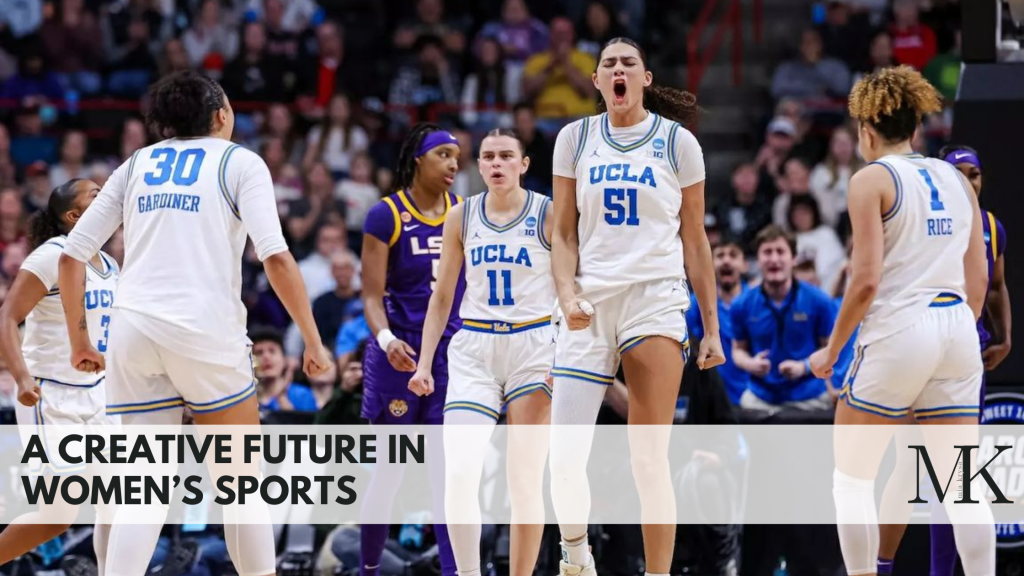
    When I think about my future in the sports world, there’s one thing I’m sure of. As a woman, I want to be an ally for other women and advocate for women athletes in one way or another. Right now, I work as a marketing intern for the Connecticut Sun, and it’s truly my dream internship. My boss trusts in my ideas and in my content, which I think has made me a more confident employee. I love writing, creating graphics, working with paid social (something I never thought I’d say!) and just being creative. Any chance I get to do anything player forward — whether that’s running a meet and greet, crafting a newsletter about what the team has been up to, or helping out a player during media day, I’ll take.

    In my personal life, I love creating content. I love reading, writing, posting on Instagram, traveling, and making TikToks. I’ve always been more creative-minded than anything, so I think working in a position that combines my strengths in creativity and my passion for the WNBA is the perfect role for me.

    Curious About What’s Next

    I’d love to stick with marketing, but I’ve also thought about creating content (player facing). With the Connecticut Sun though, I don’t think that creating content is strategic enough for me. Lately, I’ve been thinking more and more about PR, which I don’t have much experience in, but I have a knack for writing. It’s something I’m hoping to explore before my internship ends.

    I love the days where we travel and have to work games. Being in an environment where I’m seeing an audience cheering for women is inspiring, and I hope it never ends. I feel that I’ve entered the league at the perfect time — it’s exploding and it’s only just the beginning.

    Looking Toward the Bigger Picture

    One day, I could see myself transitioning to a position that spans league-wide, not just for a specific team. Working for the league seems like such a great opportunity to experience athletes, sports media, and sports marketing as a whole. I’ve learned so much from the Sun, and have come to love the team and it’s players, but content always remains focused to one team.

    I’m sitting in front of the TV, watching the 2025 WNBA All-Star game in Indiana, and can’t help but think, “what a wonderful thing to be part of.” No matter what specialty I end up in, whether it’s marketing, content creation, or PR, I know I’ll thrive in a role where I can be creative. I’m blessed to have this opportunity with the Sun, and I can’t wait to see what the future holds for the team.

  • Women’s Sports, LinkedIn, and What I’m Doing About It

    Women’s Sports, LinkedIn, and What I’m Doing About It

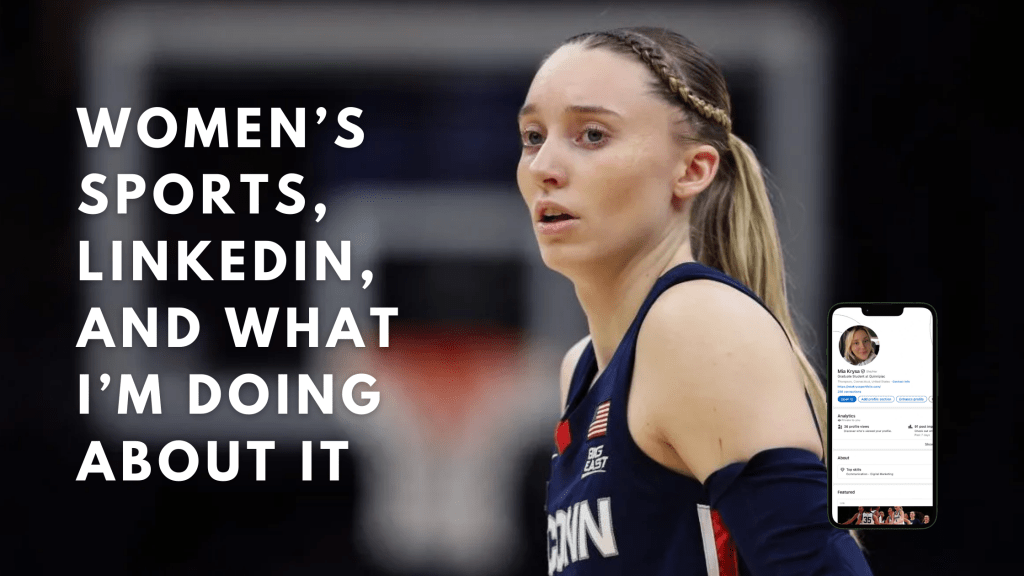
    In the culmination of my graduate degree, I’ve been thinking about what career I want to pursue and where I think I can do better as far as my online presence. I know one thing without a doubt — I want to work in women’s sports. In February, I accepted an internship with the Connecticut Sun, and it’s been such an amazing learning experience for me. Not only did I finally figure out where I fit in the professional world, but also what I’m genuinely passionate about. As a woman, I love seeing other women succeed, and as a life-long lover of most sports, I love seeing women succeed as athletes. I’ve learned so much in my internship and continue to learn more every day, about things like paid social, email marketing, app management, writing copy, creating promotional graphics, working with brand partners, ticket sales, and more.

    But why is any of this important?

    It’s important because we’re doing it for a women’s sports team. And historically, women’s sports has been neglected and ignored in almost every aspect of society — until now. The WNBA, for example, is finally getting the recognition it deserves, and has reached a new high in viewership this year. “The WNBA kicked off its 2025 season with unprecedented viewership numbers, setting new records for opening weekend on ESPN platforms. The marquee matchup between the Chicago Sky and Indiana Fever became the most-watched WNBA game ever on ESPN, drawing an average of 2.7 million viewers and peaking at 3.1 million. This marks a 115% increase over last year’s regular season ABC average.” But make no mistake — there’s still a long way to go.

    My Lacking LinkedIn Presence

    Personally, I struggle with LinkedIn. I don’t know if it just feels too formal to me, or if I’m not connecting and following with the right people. I think I’ve always felt some sort of imposter syndrome, which is when someone thinks they’re “undeserving of their achievements and the high esteem in which they are, in fact, generally held.” I’m familiar with this feeling, especially because it’s easy to compare yourself to other people in your 20s. I’m in a place right now where I feel like I could be farther in my career, but I’m really just starting, and I struggle with that sometimes.

    Because of my imposter syndrome, I’m not as confident with posting on LinkedIn as I should be. But I’m here to change that. Combining my professional interests, and my lack of presence on LinkedIn, plus my passion for protecting and recognizing women in sports — I’ll be releasing a 6-week LinkedIn series, educating others on the history of women’s sports, the gaps between women and men in multiple areas, and how we can move forward.

    A Game Plan for Change

    Look out for my LinkedIn articles! I’ll post one article and one post per week, focusing on a different aspect of women’s sports. They’ll be about 600-1,000 words long, and backed by thoughtful research from articles, journals, podcasts, books, and videos. The goal is to not only educate others on historic and societal barriers that women athletes face, but to establish myself as a thought-leader on LinkedIn. This series will aim to reach audiences
    who want to create change — from athletic directors to sports executives and everyone in between.

    Connect with me here.

  • From Fangirl to Feeds: Growing up with Social Media

    From Fangirl to Feeds: Growing up with Social Media

    The Early Days of the Internet

    When I think about the way that social media has changed over the years, it baffles me. I was born in 1999, the same year of the Internet. I grew up without much social media, and iPhones didn’t come out until I was 8 years old. Back then, I remember iPhones being considered some kind of luxury.

    I remember social media really becoming popular around 2013, when I was in 8th grade. At this time, I was obsessed with the boy band One Direction. I’d spend my days on Twitter and YouTube, watching music videos of the band, following their journey, and tweeting about them with other young girls who had the same interests. At that time, many people said that One Direction surpassed the popularity of the Beatles, which sounded like a crazy statement at the time. Looking back, they were exactly right, and that was because of social media.

    One Direction and their Online Community

    “One Direction had a recruitment and promotional technique that no boy band before had ever utilized properly: the internet” (Greenwood, 2020). CDs turned into Spotify. Newspapers turned into Twitter threads. Traditional publicists turned into fan accounts with thousands of followers. Social media connected the distance between celebrities and fans in a way that was never possible before. One Direction’s popularity wasn’t just about their music — it was about how easily their music could be shared. Fans from all around the world could tune in. It also felt like they had a personal stake in the band’s success because they were part of the online community that kept the hype alive.

    In 2013, there were no algorithms manipulating our feeds, no influencer marketing, no brands trying to sneak into our conversations. Social media felt new, simple, and much less commercialized. As I’ve gotten older, and continue to use social media daily, I’ve noticed a shift. Social media platforms today feel more like digital malls than gathering spaces. Content is now designed for virality rather than authenticity. The same tools that helped build global communities around a band like One Direction are now used to sell products and even used to spread misinformation. Instead of social media being a fun place to go, it can sometimes feel overwhelming and saturated.

    Nostalgia for the old Social Media

    Still, I can’t help but feel nostalgic. Social media introduced me to people I would’ve never met in real life. It gave me a voice at a young age, and put me in touch with other girls who had the same interests. I often wonder if today’s teens feel the same way. The Internet has grown up and so have I, but I’ll always reminisce on the times I used it to support a boyband from the UK.

  • The Struggle to Focus in a Distracted World

    As I’ve continued reading Stolen Focus, I’ve begun to think more about ADHD, anxiety, stress, and the internet. Quite a handful, I know. Hari, the author of Stolen Focus, talked about an interview he’d had with Dr. Nadine Burke Harris. Dr. Harris explained how so many children and people are struggling to focus because their brains are focusing on surviving. Not only are we being overstimulated by things like social media and the news, but for some people, traumatic events cause them to constantly be on the lookout for the next shoe to drop.

    One heartbreaking story Dr. Harris told was about a boy named Robert who had been abused by his mother’s boyfriend. This happened around age 10, which is when his attention problems started happening. Think about the stress that this causes a child, and then picture that child trying to learn long division in school. Robert’s brain was using all of its energy to detect danger — his mother’s boyfriend — instead of learning new things. It wasn’t his fault he couldn’t pay attention.

    Robert was prescribed medication to help him focus in school, but his problems at home were being ignored. Why, as a society, are we ignoring things like this? Why are we ignoring the problems that are happening at home? The real-life issues? It seems like everything now is covered up with medicine or by ignorance.

    As a society, we’re given antidepressants instead of meditation and therapy. Drinking coffee instead of sleeping more. Watching TikTok when we could be outside. Not speaking to each other during meals. All of this comes back to the problem that I wrote about in my first blog post — is this really the true human experience? I don’t think it is.

    I’ve been traveling a lot these past few weeks. I was in Cleveland last weekend and am in Atlanta writing this post. And I notice the same behavior everywhere. As I look around the airport, everyone was on their phones. On the plane, there are TVs behind every seat. What happened to resting, sitting, and talking to each other? It sometimes feels impossible to escape media and just take a break when it’s all around you, all the time. I’m slowly learning that a slow, simple life seems to be the healthiest way to live. The challenge is, how do we live this way when society doesn’t let us? As a population, we are so used to being inundated with information that it’s hard to catch a break.

    I don’t know how we change society as a whole. But, the best thing we can do, is change our behavior for ourselves and those close to us. If enough people realize the true meaning of human connection and life itself, we might be on our way to healing.