Tag: fiction

  • Lessons from Ms. Williams

    Photo by lil artsy on Pexels.com

    After beginning On Writing Well, by William Zinsser, I started reflecting on my life as someone who’s always considered herself a writer. My earliest memories involve me having some kind of journal, where I’d write about my days at school and talk about memorable moments that I wanted to remember. As time passed, these moments ranged from concerts, holidays, vacations, the birth of my sister (my favorite—I was 12, and it was on Easter that year), graduations, breakups, and everything in between.

    Over the years, I began adding pictures into my journals. I’d print them from my phone, take Polaroids, and kept receipts or other memorabilia to glue into the pages. Some of my favorite pages to look back on are where I kept to-do lists. I’m able to look back on not only what I was thinking about that day, but what I had to do. My to-do lists from high school are vastly different from my to-do lists now. I love being able to see the natural progression of my own life.

    In high school, I enjoyed writing essays and English assignments. My school was very small, with not many teachers, so I had the same English teacher my freshman and senior year—Ms. Williams. She was always serious and came off a bit cold at times, but you could tell that there was warmth beneath the surface. I think I’d only seen her laugh a handful of times. She cared about what she taught and it showed.

    Ms. Williams ingrained a few rules about writing in my brain that I will probably never forget. We could never use first person in our writing. It felt so freeing anytime I’d had an assignment where first person was allowed. She taught us how to structure a thesis at the end of an introduction, and we had to follow this format no matter what:

    One can see why/how this argument is true (for example) by analyzing xyz.”

    That used to frustrate me. One? Who is that? In On Writing Well, Zinsser, he states, “I don’t want to meet “one”—he’s a boring guy.” She also hated when we used the word “it” as she felt it was unclear. For example:

    Ms. Williams was also the only teacher to give me a detention for going to the beach on senior skip day. On Writing Well has me questioning rules about writing that I believed to be true. I’ve never read a book about writing, so maybe his opinions aren’t necessarily unique, but they’re new to me. I’m excited to continue reading this book and learning more about writing to become a better writer. So far, I’ve learned that it doesn’t have to be that serious. Write for you, not an imaginary audience. I’m thankful I have years of journals to look back on and know I’ve improved as a writer since my middle school journals, maybe thanks to Ms. Williams.

  • The Importance of POV the in Design Process

    Photo by Maksim Goncharenok on Pexels.com

    A crucial part of the design process involves understanding the user’s point of view. Up until this point, I’ve covered empathy pretty deeply — but wanted to touch on POV and problem statements in design.

    What’s a problem statement and why are they important?

    A problem statement is sometimes thought of as the most challenging part of the design process. It forces designers to either come up with a problem statement to solve or focus on a problem statement that’s already been brought to their attention. When you have a clear statement that guides you in the direction of brainstorming solutions, it makes the design process more clear and helps you to stay focused. When you have a clear objective, you’re much more likely to stay on track.

    Problem statements aren’t just random words strung together. They have to be well thought-out. There are a few qualities that a successful problem statement should have, according to Interaction Design Foundation. These qualities are to be:

    1. Human-Focused. Have you noticed a theme in design thus far? Hint: the user comes first. 😆
    2. Broad enough to allow creativity. Don’t get stuck in a box! Your statement needs to be focused with room for flow and creativity.
    3. Narrow enough to stay organized. I know, it’s a bit of a juxtaposition. Just don’t go overboard. Keep it simple and to the point.

    Where does POV come in?

    A point of view (POV) is a meaningful and actionable problem statement which will allow you to ideate in a goal-oriented manner.

    Empathize with the user, know what they need, and why they need it. Take this information and structure it in a sentence like this:

    [User . . . (descriptive)] needs [need . . . (verb)] because [insight. . . (compelling)]

    There you have it! Your POV. I’ll show you an example.

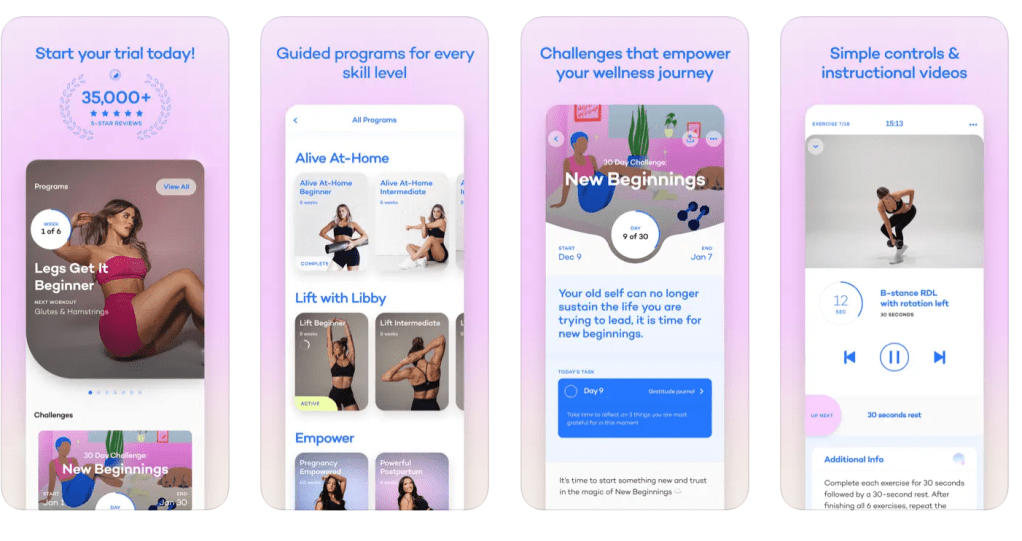
    App POVs: Alive by Whitney Simmons

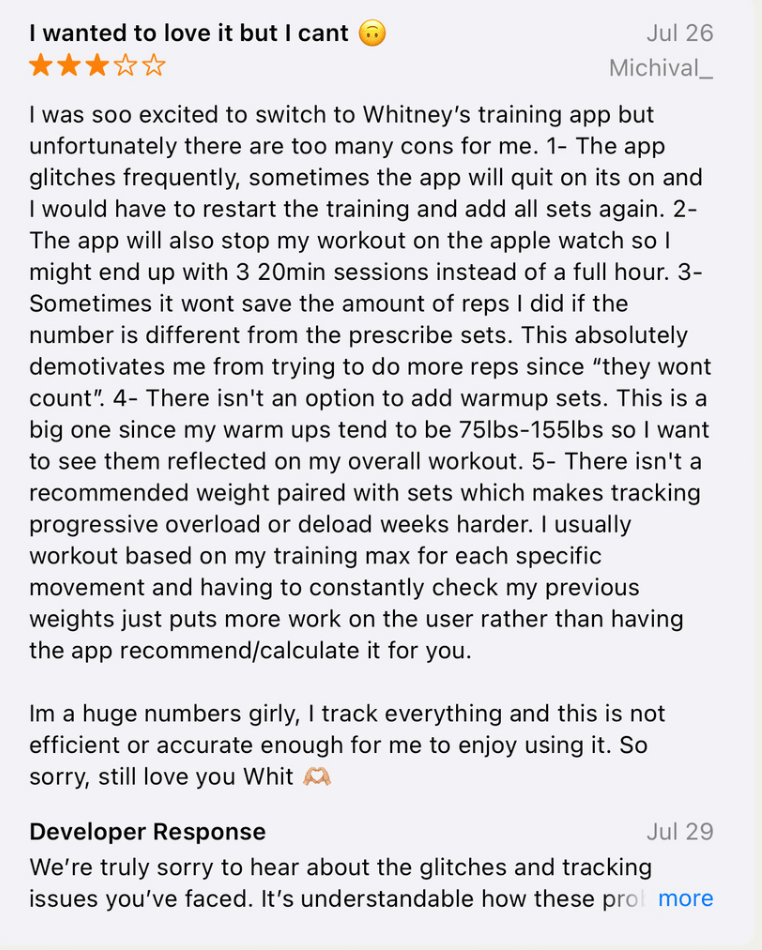
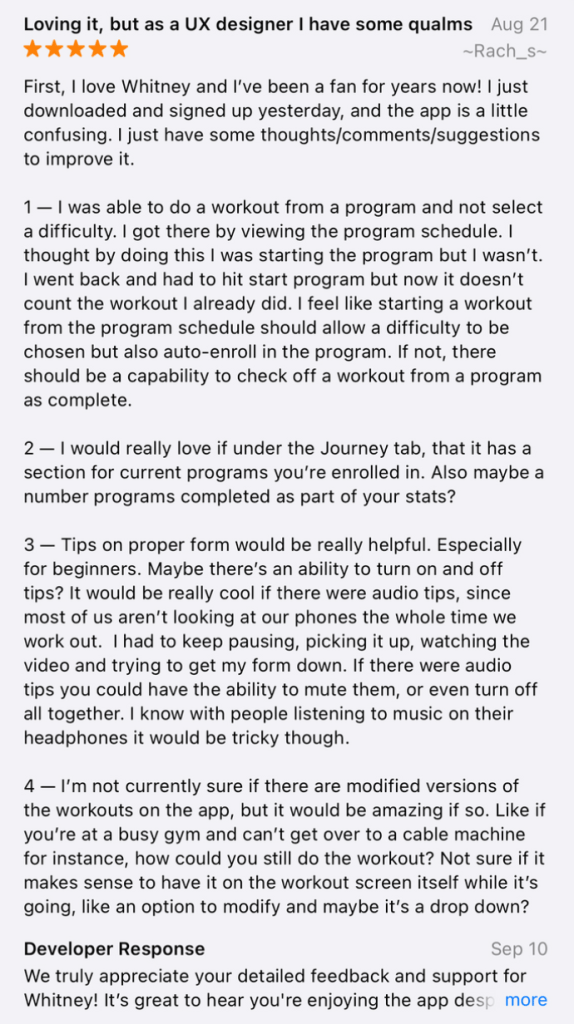
    I decided to take a look at a few workout apps, analyze reviews and collect data, then compare their problems to each other. After I got an idea of what worked/didn’t work for each app and what could be improved, I created a POV statement to reflect the user’s needs. One of the three apps I looked at was Alive by Whitney Simmons. I’m a frequent user of this app, and while I’ve had a great experience, it was interesting to see how other users were interacting with the product.

    The app is rated 4.9/5 stars on the Apple App Store. It’s a workout app that provides different programs from ones at home to ones at the gym (all for different experience levels). Most users have had a positive experience, but there were also some that hadn’t. There were other users who provided helpful feedback and suggestions to improve the app itself. Here’s some of what they had to say:

    In summary, most users loved the app but had ideas to add a nutrition element, a way to keep track of weights/reps, tips on workout form, and more. I took this information and developed two POV statements using the sentence template I talked about before.

    Users who like to track their reps and their weights need a feature that automatically recommends or calculates the last weight used because it’s inconvenient to have to look elsewhere or remember what you may have lifted last.

    Users who want to track their calories and/or macros need a nutrition element within the app because it’s frustrating to use other apps to track food. If everything was in one place, it would be easier and more worth the money.

    The problem statements above reflect what’s important to the user and provides insight on what could be improved. It’s a clear statement that shows the designer what to work on, but allows creative freedom and room for different ideas that would solve the problem.

    I analyzed two other workout apps in comparison to Alive; Nike Training Club and Peloton. If you’d like to dive into POV in the design process a bit more, find my presentation below.